
Matured sweet wines – fresh and youthful

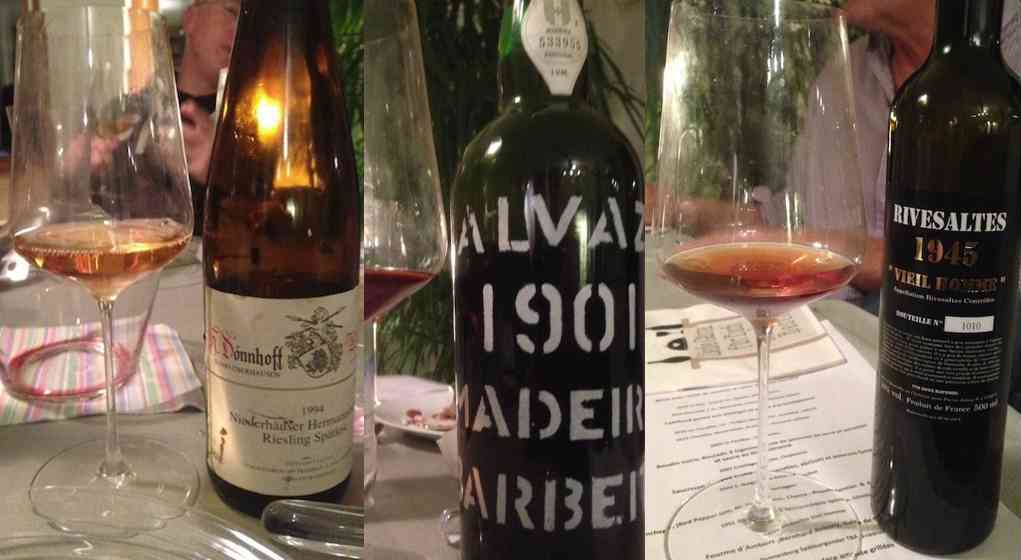
Hans had already opened some excellent wines to the excellent French dinner, including, for example, a 2013 Chevalier Montrachet from Domaine Leflaive and a 2005 Le Pavillon from Chapoutier. For cheese and dessert he had selected matured sweet wines, from German predicates such as Spätlese on Vin Doux Naturel to Madeira – all excellent.

1994 Niederhäuser Herrmannshöhle Spätlese, Dönnhoff
Quince, pear and white peach on the nose, delicately smoky. Very fresh on the palate, prominent acidity, mild fruit, juicy, lean, … Read more ...

Rheingau Riesling – Auslese with fruity acidity

In the Rheingau, the Rhine flows mostly from east to west, so that most of the vines grow on south-facing slopes, in the only a few kilometers wide wine growing area north of the river. Protected by the Taunus from cold north winds, the grapes thrive in a climate with warm, low-precipitation summers and mild winters, as well as the temperature and moisture-regulating effects of the Rhine. With a share of 80% Riesling is the key grape veriety of … Read more ...

Grand Cru from the Loire – Quarts de Chaume

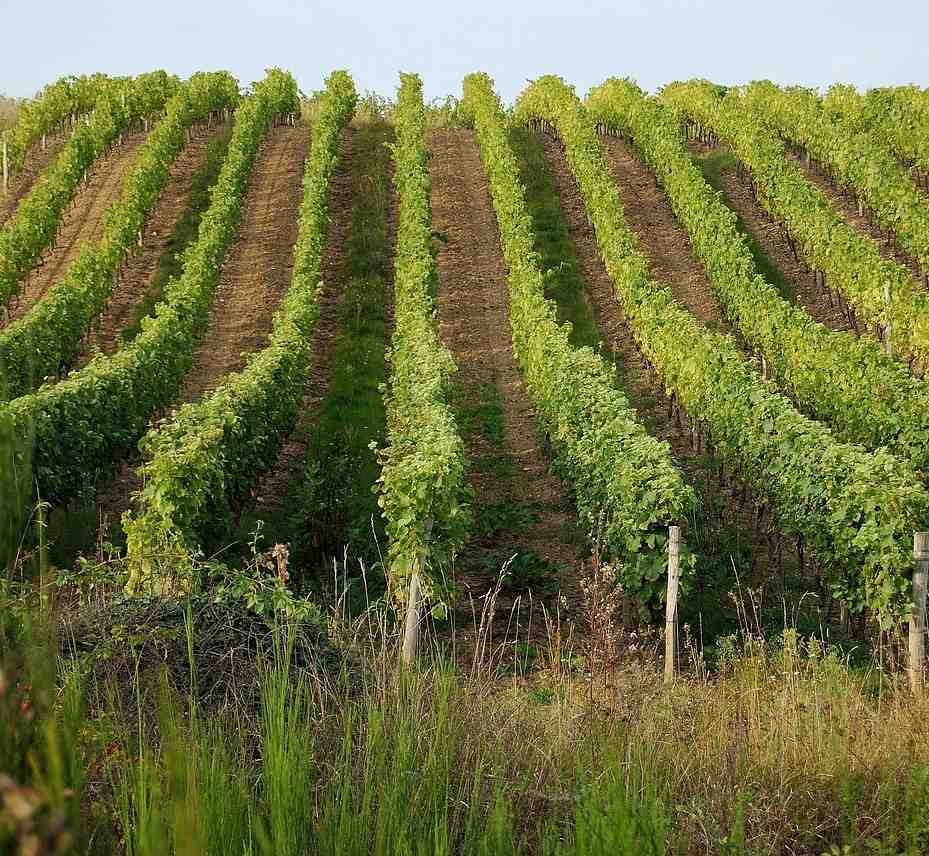
Weinyard at the Loire © Pixabay

Château Bellerive cultivates twelve hectares of Chenin Blanc-planted vineyards in the commune of Rochefort-sur-Loire. Part of this community is located in the 54-hectares Quarts de Chaume appellation, which is also part of the nearly 3400 hectares AOC Coteaux du Layon.

Quarts de Chaume wines,- concentrated, expressive and extremely long-lived -, have the status Grand Cru, which can also be labeled on the label – the wines of the Coteaux du Layon appellation may only be labeled Premier Cru.
The Grand Cru status is due not only to the very low yield of 20 hectoliters per hectare, but also to the location. The vineyards in Quarts

Read more …

Auslese Gold Capsule by J.J. Pruem – High End Class

Gold capsule is the name given to the gold-colored bottle enclosure, which is used primarily in the wine regions Mosel and Rheingau to identify particularly high-quality sweet wines. A superlative of it is in addition the Lange Goldkapsel (long gold-coloured enclosure), sometimes abbreviated LGK. Usually there are only small amounts of these sweet qualities, which often are not traded, but only available at auctions.

Also the winery J.J. Pruem, one of the most renowned wineries in Germany, usually … Read more ...

Mosel Riesling 2016 – Fruity elegance

Bernkasteler vineyards (at the upper edge from the village from right to left: Doctor, Graben and Lay) © Pixabay

Maximilian Ferger‘s passion for wine becomes clear if listening to him, the enologist and manager of the renowned winery Wwe. H. Thanisch – Erben Mueller-Burggraef, when he is speaking about his work in the vineyards and in wine cellar.
Talking with him about Riesling and Pinot Noir on the phone, I had the impression that he speaks of the vines as his children. Just as you give children the best you can, in any case, he wants the best for his vines. In doing so, he pursues an ecologically oriented, sustainable path, which also includes the renunciation of herbicides and botryzides – a path that will soon be completed

Read more …

Tokaji – Hungary’s sweet miracles


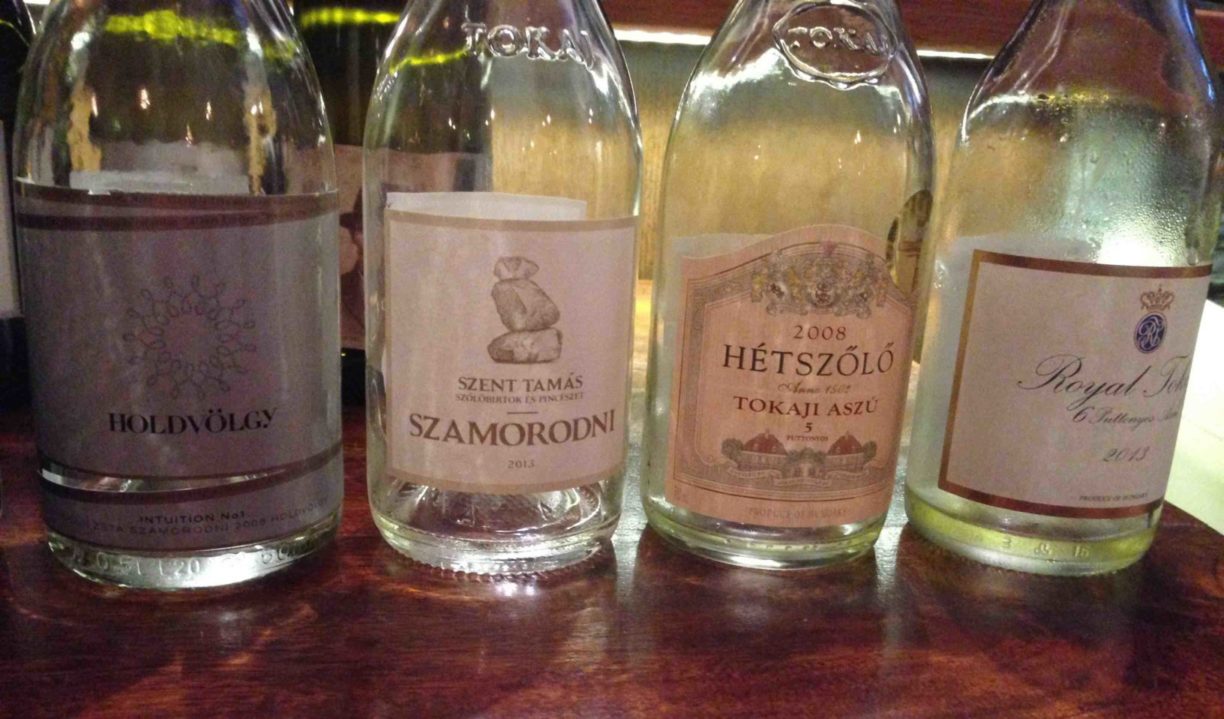
Zoltan Sánta, member of the board of the Weinakademiker had brought with him mainly dry Hungarian wines to the tasting beginning of October in the Munich cork wine bar, but at least four sweet wines from Tokaj. There are 134 grape varieties in Hungary, but only six of them are approved for the production of sweet Tokaji: Furmint, Hárslevelû, Sárga Muskotály, Zéta, Kövérszőlõ and Kabar.

The vineyards in the Tokaj are predominantly on mineral soils of volcanic … Read more ...

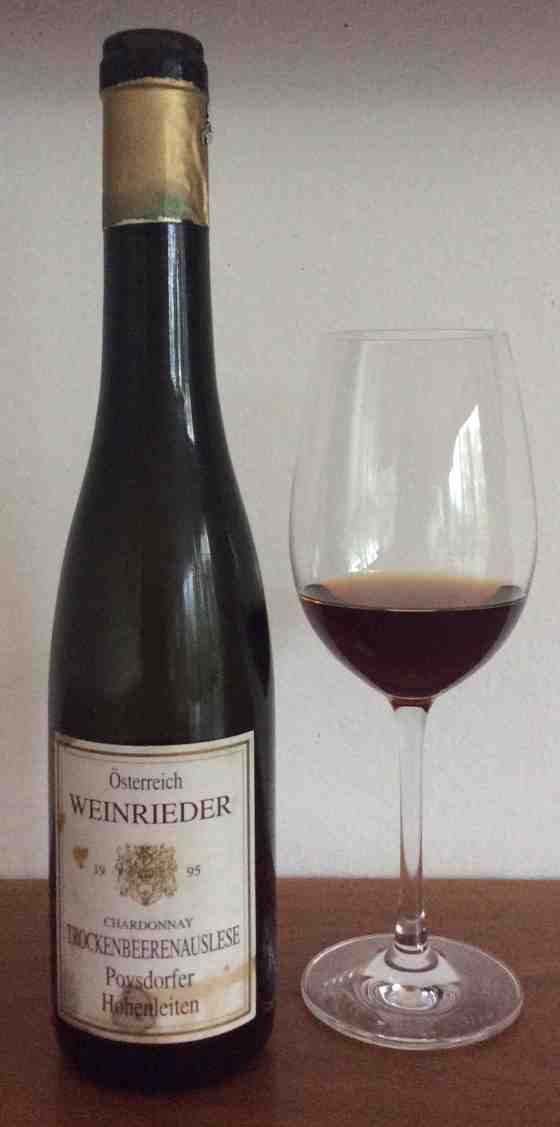
Are matured Trockenbeerenauslesen the better choice?

In other words: Are matured, ie older Trockenbeerenauslese better than those from younger vintages? Several reasons have led to this question, the most important is probably that I think the sugar content of Auslesen seems to be optimal. Another important reason is the fact that my wine friend Hans stores a lot of sweet wines, including many old TBAs in his wine cellar, from which we time by time we taste some. As a result of this fact, six of … Read more ...

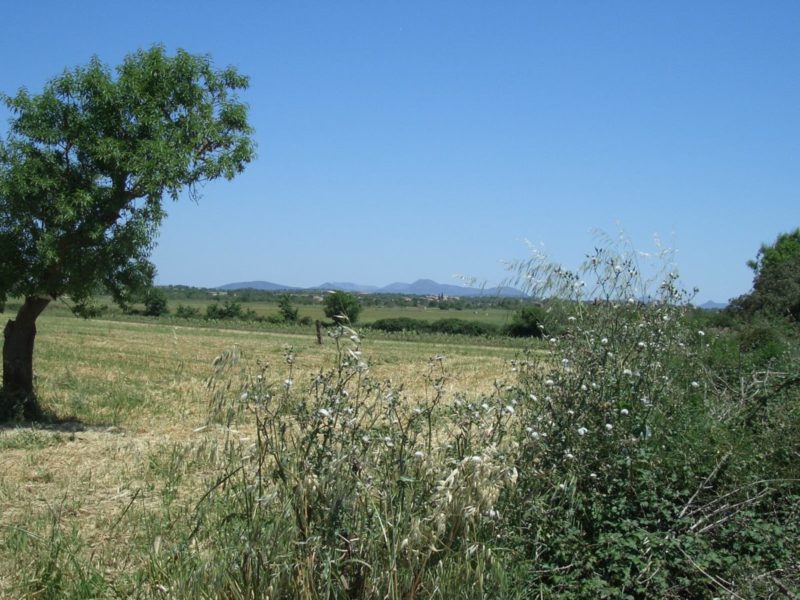
Majorca – Vi blanc dolç

Inselinneres von Mallorca

Majorca had more than 10 million visitors last year. The least of them probably drink Majorcan wine, because the amount produced there annually of about 6 million bottles would not be enough.

Only 10% of the area of ​​Majorca is planted with vines. 2,500 hectares of vineyards are spread over four wine growing areas. Almost two-thirds of the areas claim the Vino de la TierraMajorca and Serra de TramuntanaCosta Nord, the rest is shared by the higher quality DO (Denominación de Origen) Binissalem and the DO Pla i Llevant, located in the southeast.

Anyone who has already drunk Majorcan wine could have already made the acquaintance of one of the indigenous grape varieties of the Balearic Islands. Above all, these are the red varieties Manto Negro, Callet and the white variety Prensal, also called Moll.

Read more …

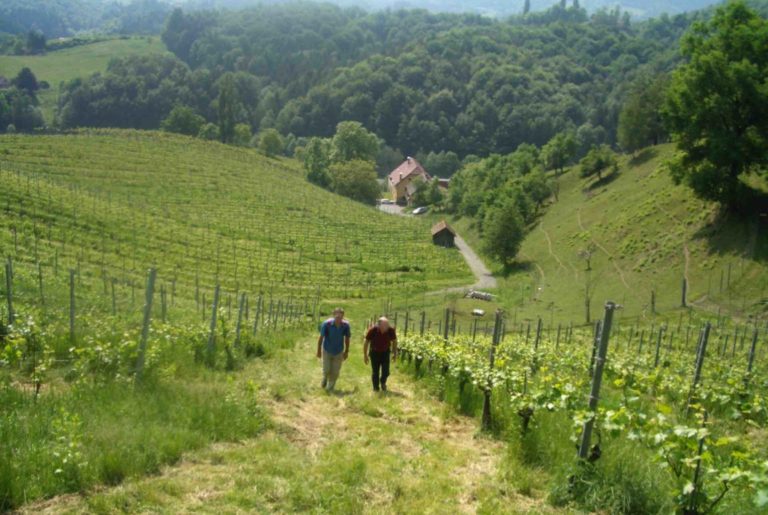
Trockenbeerenauslese from southern Styrian Opok

“Evi and I are going on vacation to southern Styria at the winery Tauss” my friend Udo told me. I, too, had been on vacation in the winery Tauss and bought wine there – the last, recently opened bottle of the red Traminer macerated and fermented on the grape skins in 2006 has been sensationally good. Only one sweet wine of Tauss was slumbering in the wine cellar, a 2002 Trockenbeerenauslese of Pinot Gris, in German named GrauburgunderRead more ...

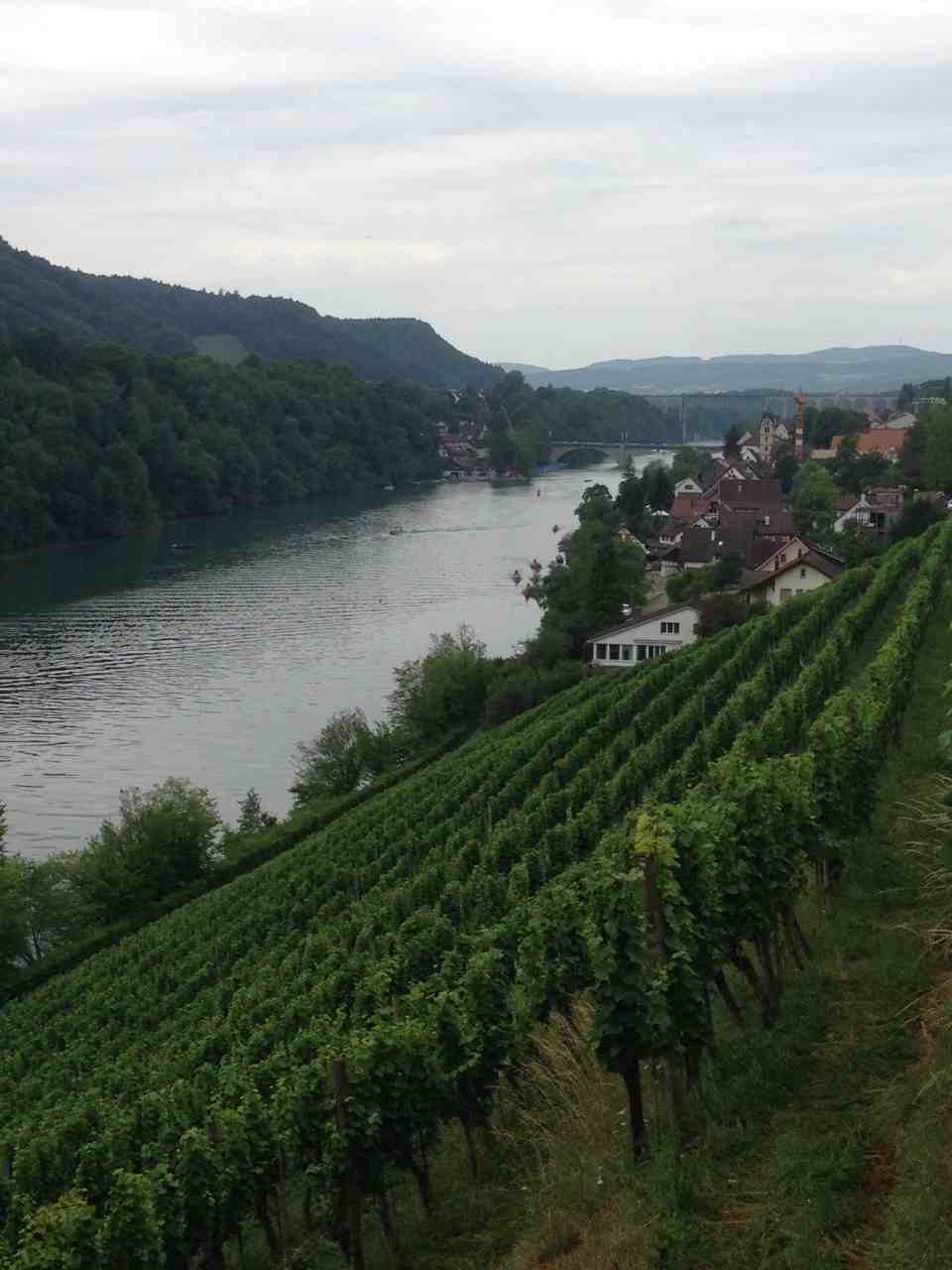
Swiss straw wine from the Rhine

From Ticino to Aargau our Swiss wine tour led us this year in June. We also got to know the Räuschling, an indigenous Swiss grape variety, of which only 25 hectares are cultivated worldwide, 18 hectares of which at Lake Zurich. The parents of the grape variety are the grape varieties White Heunisch, also known as Gouais Blanc or Gwäss as well as the vine named in the Jura Savagnin Blanc and in Switzerland Heida. GouaisRead more ...