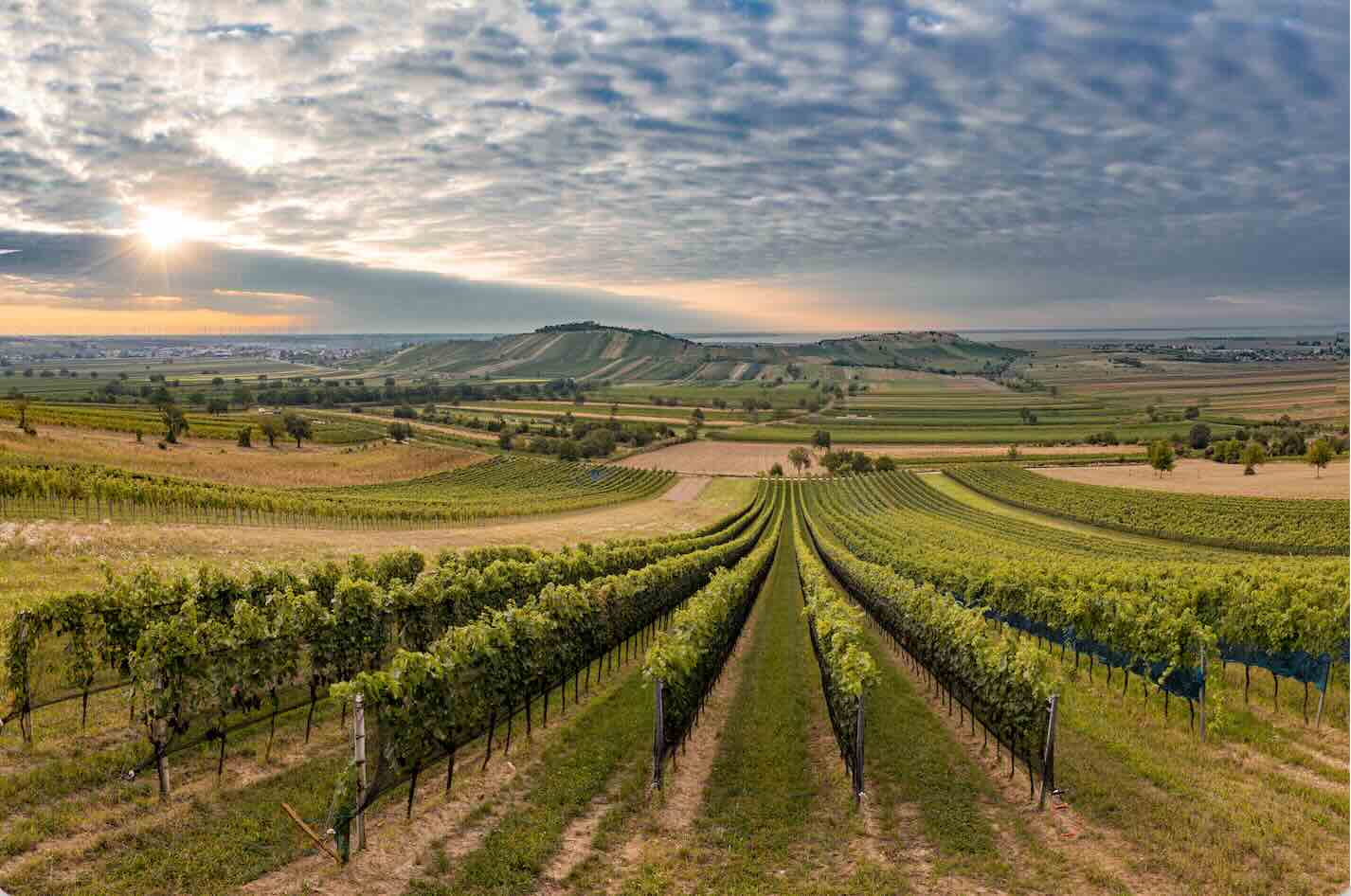
Located to the west of Lake Neusiedl and the Leitha Mountains, Jois lies in the northern part of the wine-growing region of the same name—a region that extends southward as far as Mörbisch, at the southern end of Lake Neusiedl. It is in Jois that one finds the Martin Pasler Winery, whose Beerenauslese we tasted. Established in the 17th century, the winery has been managed by Martin Pasler since 1994—and has been farmed organically since the year 2000.
The winery’s 11 hectares of cultivated vineyards feature a variety of soil types: mica schist and shell limestone in the Leitha Mountains, gravel soils to the northeast of the mountains, and sandy and loamy soils to the south, closer to the lake. The vines thrive here in a Pannonian climate characterized by mild springs and hot summers, with moderate annual rainfall ranging from 600 to 700 mm. Lake Neusiedl exerts a moderating influence on the climate; in autumn, it also plays a significant role in the development of Botrytis (noble rot)—and, consequently, in the production of Beerenauslese and Trockenbeerenauslese wines.
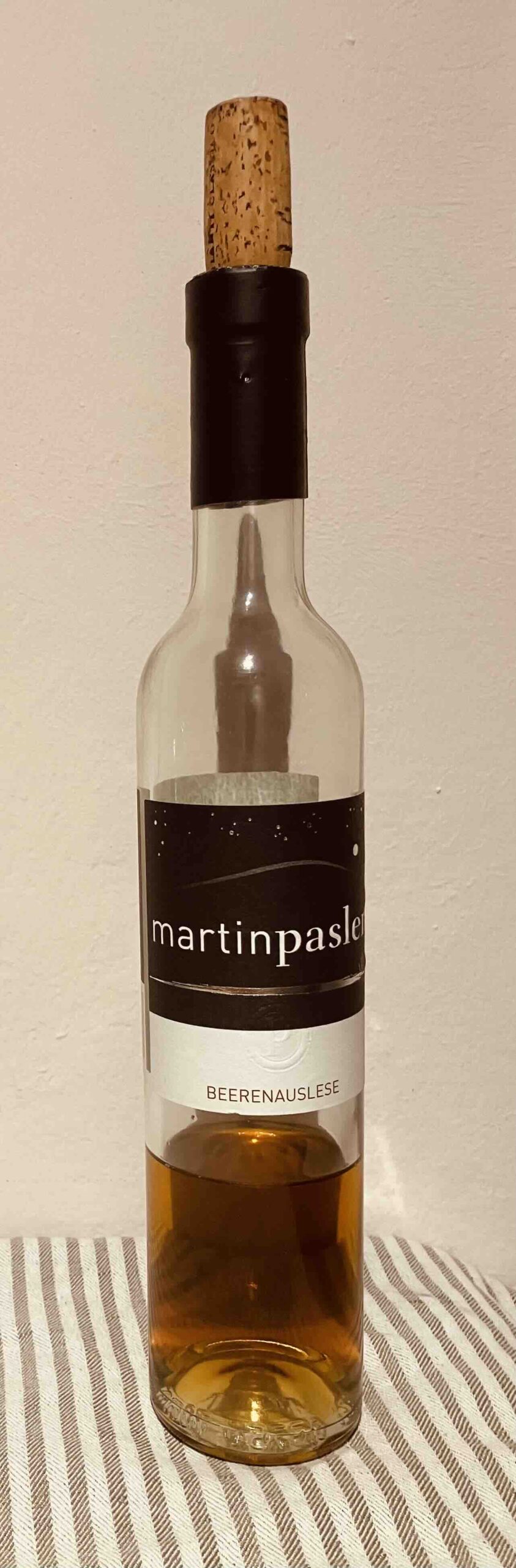
Regarding the *Beerenauslese* we tasted, it should be noted that we found neither a vintage designation on the label nor were we able to determine precisely which grape varieties were used to produce the wine. If the composition mirrors that of the 2018 *Beerenauslese*, the blend would consist of Welschriesling, Goldburger, and Neuburger. One thing, however, is certain: the wine paired beautifully with the sweet salted caramel tartlets we enjoyed alongside it.
Beerenauslese, Martin Pasler (Tasted)
Pale amber in the glass. On the nose, spicy notes of *Botrytis* mingle with rounded, fruity notes of apricot and pineapple. On the palate, it is full of sweetness, which, through spicy, delicately bitter notes, gives the good sweet wine an almost minty fresh appearance, which, together with the citrusy fine acidity, ends in a good finish.