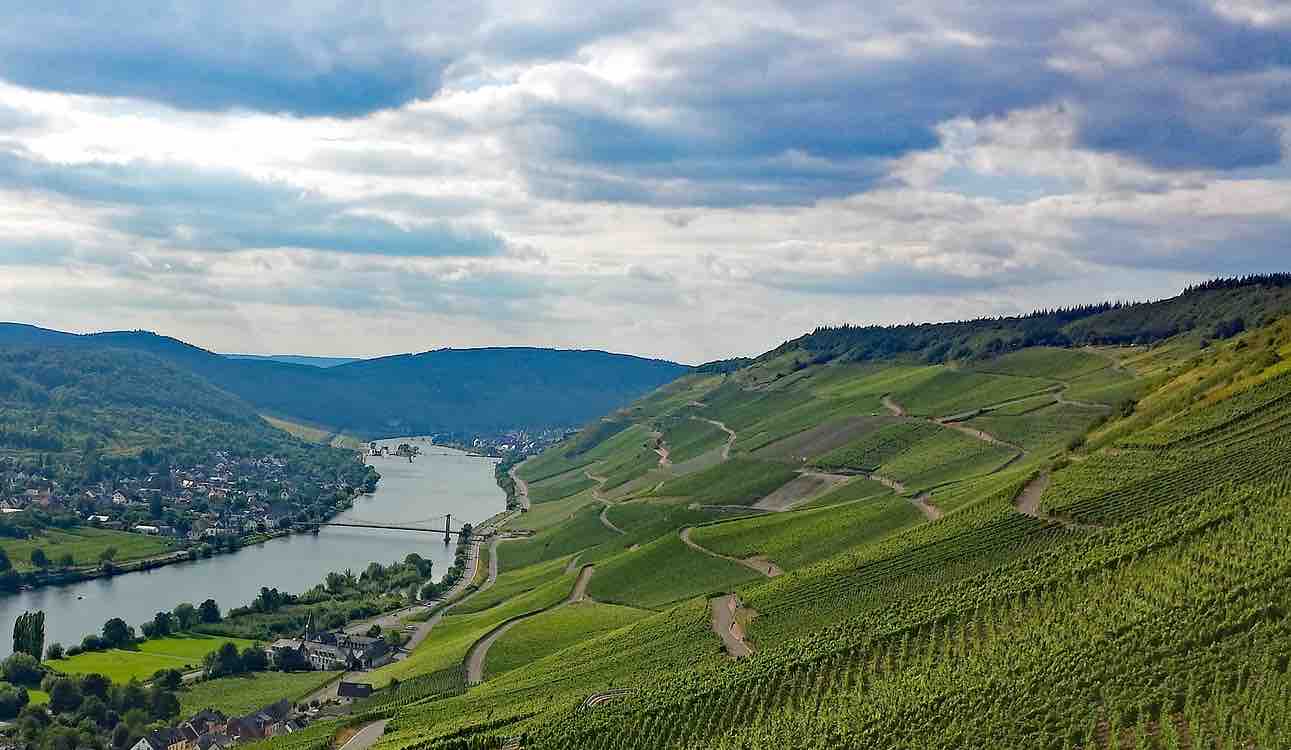
Piquant Balance – Wehlener Sonnenuhr Auslese of Schloss Lieser

© lapping Pixabay

In 1992 Thomas Haag started as cellar master at the Schloss Lieser winery, and the winery is in his possession since 1997. Over the years he has steadily developed it into a top Moselle winery. His wines prove this even more than all the winery’s awards. Around 17 hectares of vineyards in steep locations are cultivated, around a third of which are in the Lieser Niederberg Helden location, the rest are in the Lieser Schlossberg, Brauneberger Juffer Sonnenuhr, Brauneberger Juffer, Graacher Himmelreich, Graacher Domprobst, Piesporter Goldtröpfchen, Bernkasteler Doctor sowie Wehlener Sonnenuhr.
Read more …

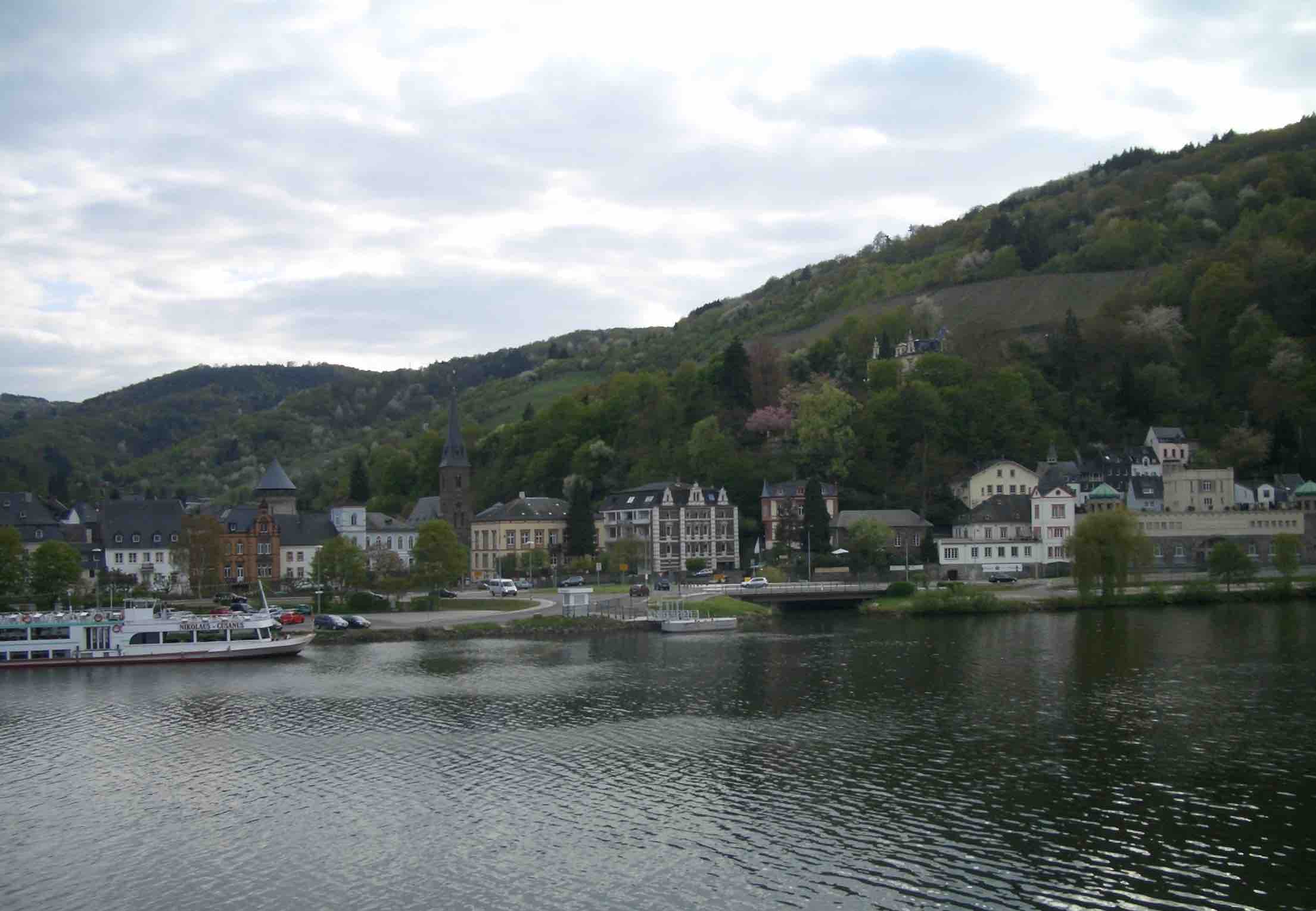
Complex late harvest from the Enkircher Ellergrub

A few minutes away from the Hotel Bellevue lies the winery Weiser-Künstler in Traben-Trarbach. The Art Nouveau hotel recalls the wealth of the city at the time of the very profitable trade in Riesling wines around 1900, when the Mosel town, after Bordeaux, was the second largest wine trading town. So it is not surprising that many of the vines there have a considerable age and also, not so few of them are growing on their own roots, so are not grafted.

Read more …

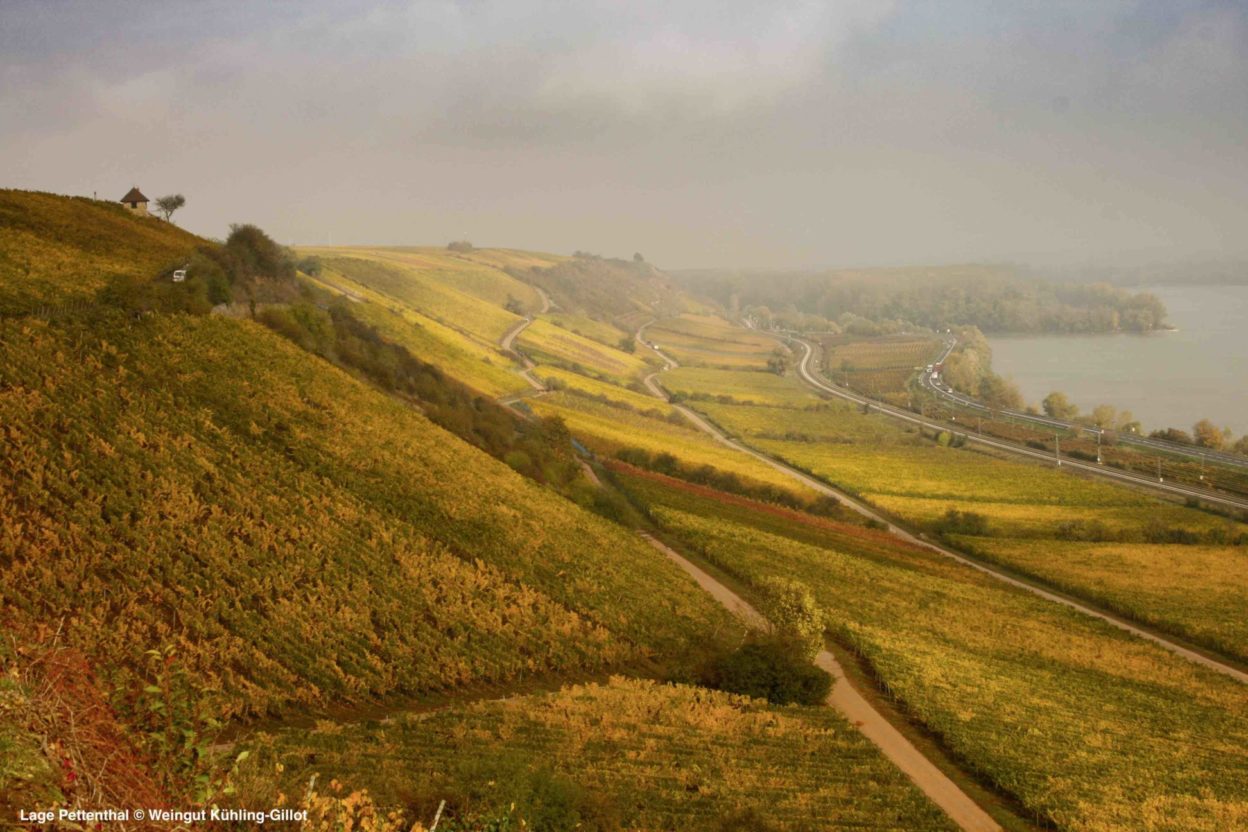
Expressive Auslese of the “Roter Hang”


Rothenberg, Hipping, Pettenthal and Ölberg are vineyards lying at the red slope near the Rhine-Hessian Nierstein. In all these vine locations the Bodenheim based winery Kühling-Gillot owns vineyards. The winery which operates since the 19th century in the winegrowing business, besides the two main grape varieties Riesling and Pinot Noir has planted on its 11 hectares of vineyards Pinot Gris, Chardonnay, Scheurebe, Gewürztraminer and to a smaller amount Cabernet Sauvignon, Merlot and Syrah.

Read more …

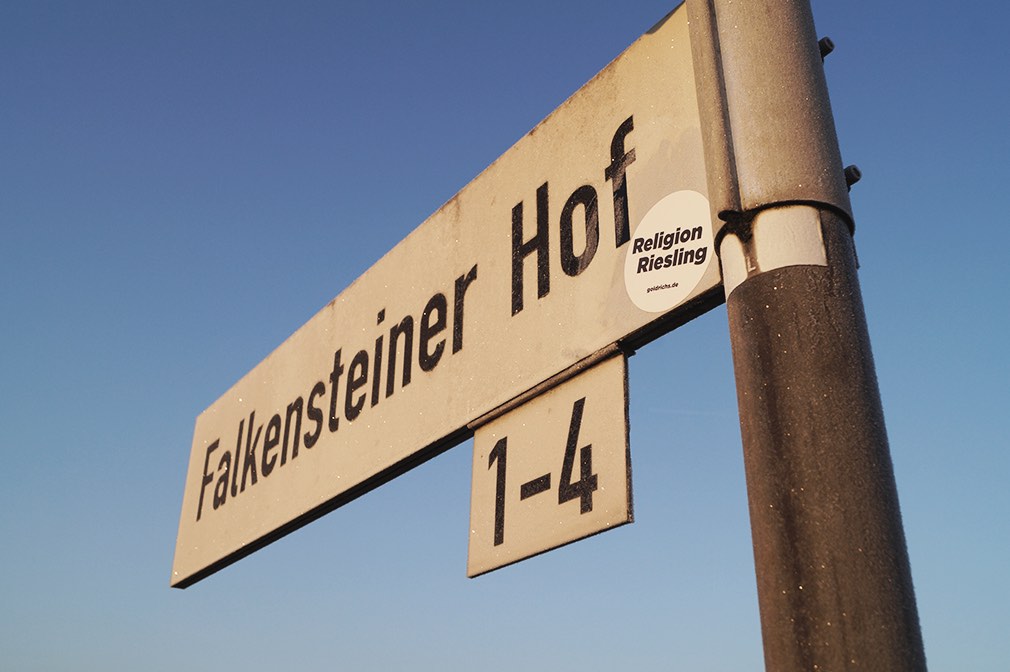
Hofgut Falkenstein – Gripping Late Harvest from the Saar


© Nico Kliche, Goldrichs

If you look on the Internet for ways to buy wines from Hofgut Falkenstein, you will find only a few suppliers. Some of them even point out that they receive only small quantities and a delivery is therefore reserved for regular customers. The wines from Hofgut Falkenstein are not only very popular in Germany, you could say, there is a real hype and the vintages are often sold out very quickly.

Read more …

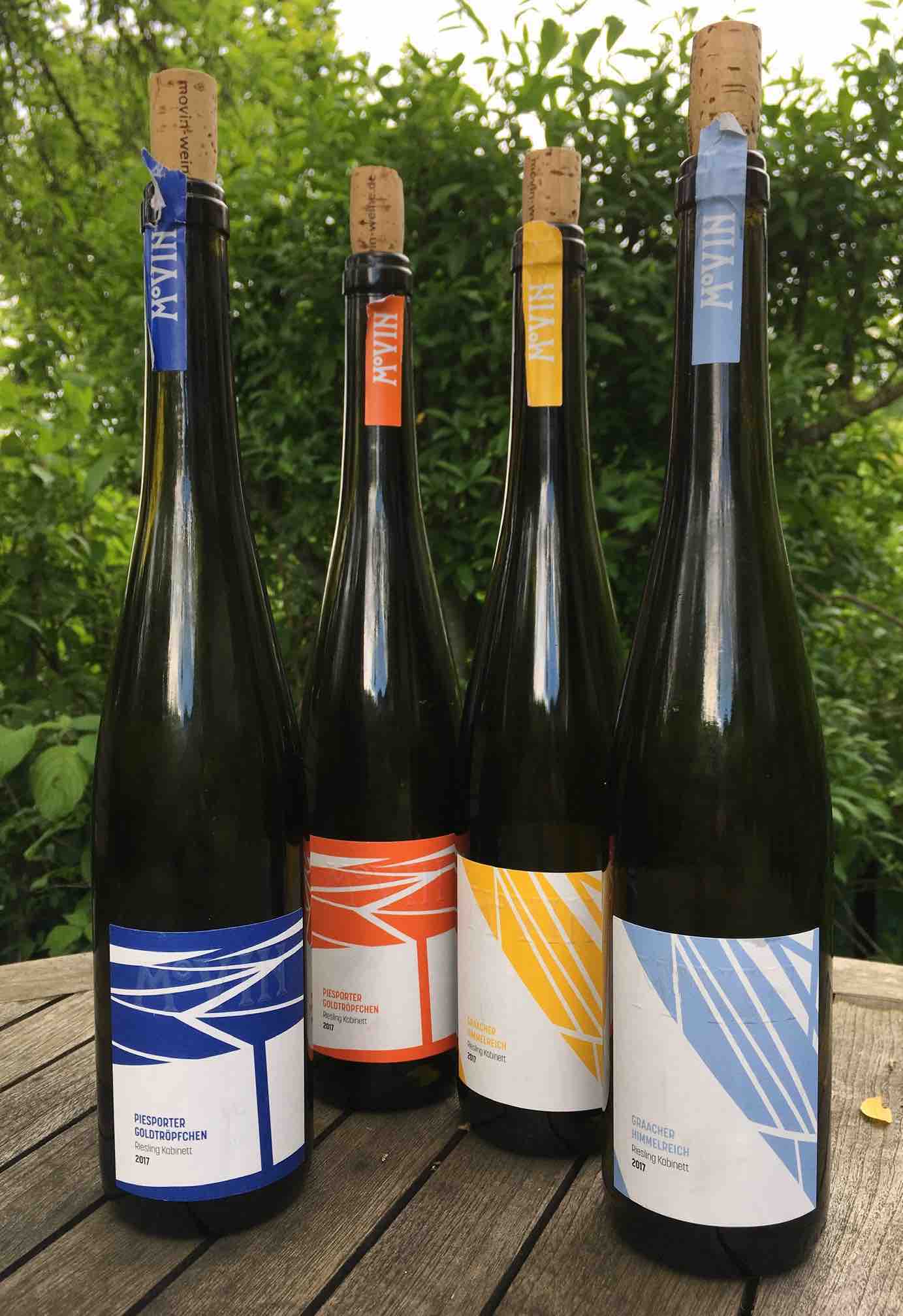
Classic Kabinetts of great Moselle vineyard locations

M°vin stands for wine from the Mosel, actually rather for fruit sweet Cabinet wines. Only these are offered by M°vin, which goes back to an initiative of the native Moselles Roman Bastgen and Felix Schon. During their studies in Cologne the two made the experience that the Cabinet wines of their home were very well received with their Cologne friends and acquaintances, even with those who wanted to drink only very dry wines.

So they came up with … Read more ...

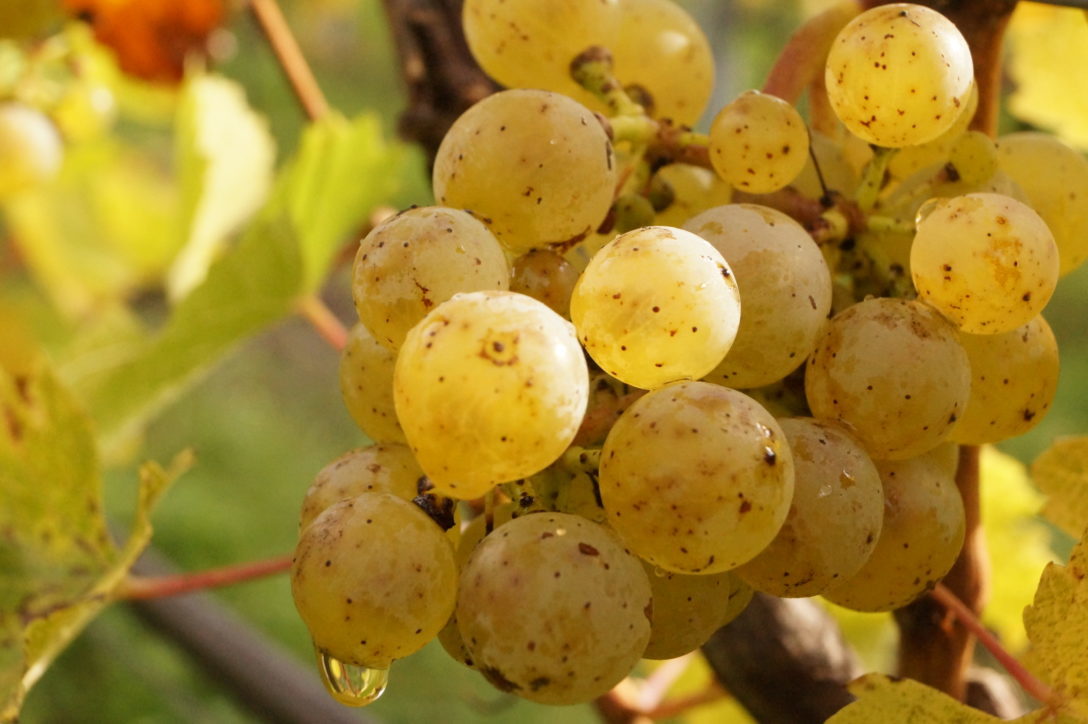
Saarriesling Kabinett – fresh, juicy, racy

© Nico Kliche, Goldrichs

About one and a half years ago I heard the first time from the online shop Goldrichs, which offered only fruit sweet Rieslings at that time. At that time, I had been asked by Goldrichs if I would like to taste some wines of the assortment and post the tasting in my blog, with which I agreed. This has only been because I found the idea of ​​putting fruity Rieslings in the center of attention worth of support and still find.

Read more …

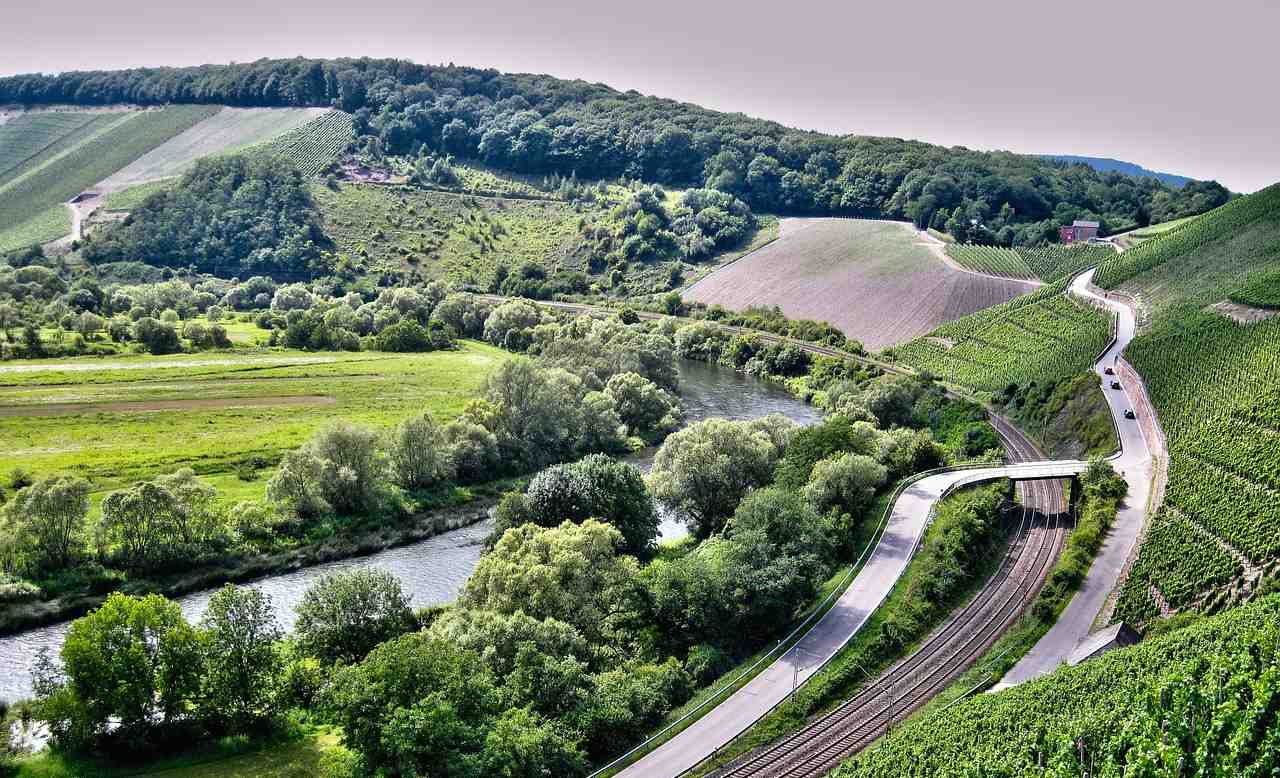
Scharzhofberger Riesling Late Harvest – Vereinigte Hospitien

Viticulture on the Saar © Heinz Teuber  Pixabay

The Vereinigte Hospitien, founded in 1804 by Napoleon Bonaparte as a social foundation, still perform this task today by looking after and caring for old, sick or disabled people in different institutions. From the beginning, a winery was also part of it, which provably has cultivated the first Riesling in the Mosel valley in 1464. The figure of St. James on the bottle label reminds at the St. Jacobs Hospital, the owner at that time.

The United Hospitals are also known for their spectacular wine cellar, the oldest wine cellar in Germany, which impresses not only with ancient Roman masonry from around 330 AD, but above all by its size and the possibility to enjoy wine tasting there.

Read more …

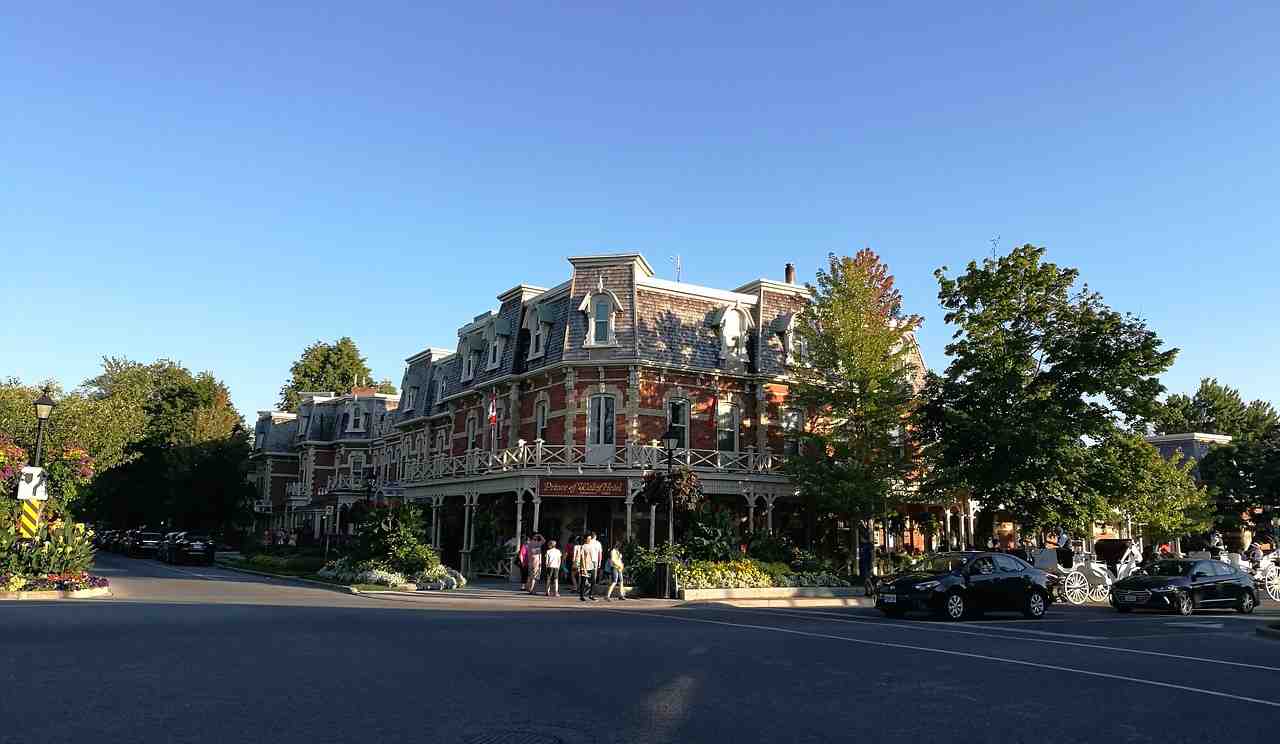
Niagara – Canadian Icewine

Niagara-on-the-lake © Pixabay

Canada is considered the world’s largest producer of ice wine. This is also reflected in the value share of exports, which can account for up to 25% of Canada’s $ 80 million (Canadian dollars) worth of Canadian wine exports per year, as in 2016. However, the 3334 hl of ice wine produced at that time was only 0.5 % of the total exported wine amount, which means that Canadian ice wine costs six to seven times more as dry Canadian wine.

Read more …

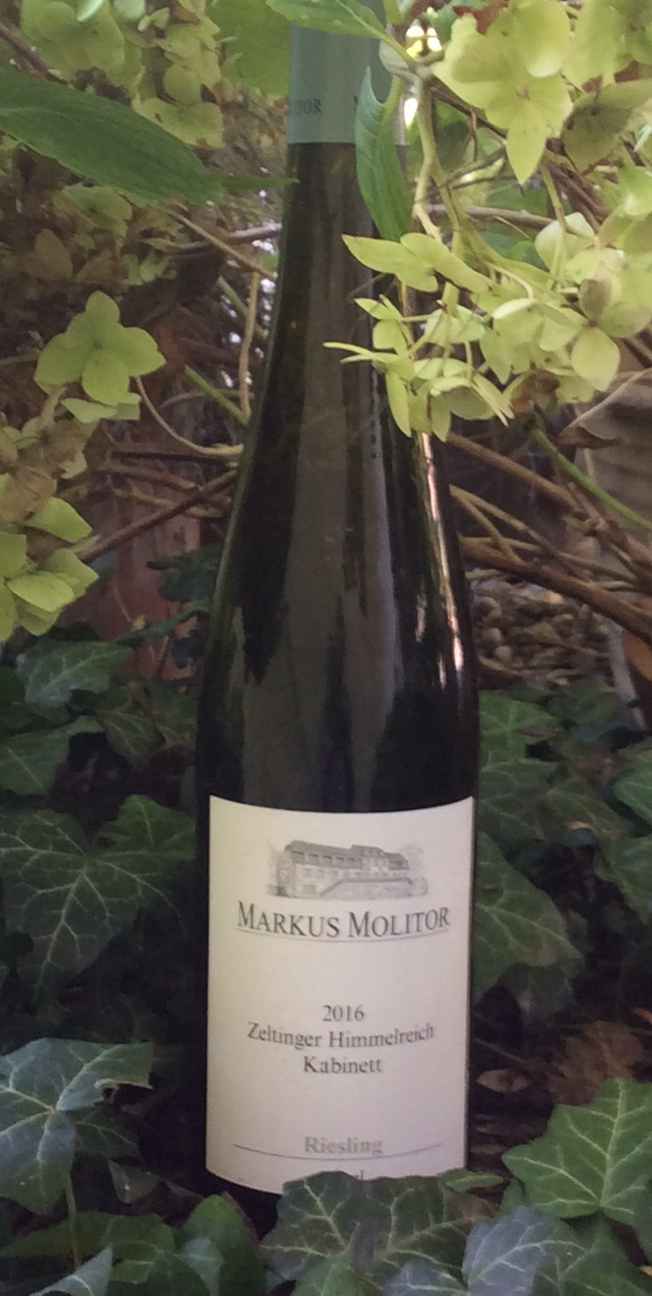
Feinherb showpiece – Molitor’s Zeltinger Himmelreich 2016

There are four different grades of sweetness according to German and EU wine law: dry, semi-dry, semisweet and sweet, in addition, one also finds the term feinherb. A term probably only used in Germany, which should convey to the consumer that the wine has a fine, slightly herb note, even though or just because it is not dry.

In various wine lexica it can be read that a feinherb wine, such as a semi-dry one, has … Read more ...

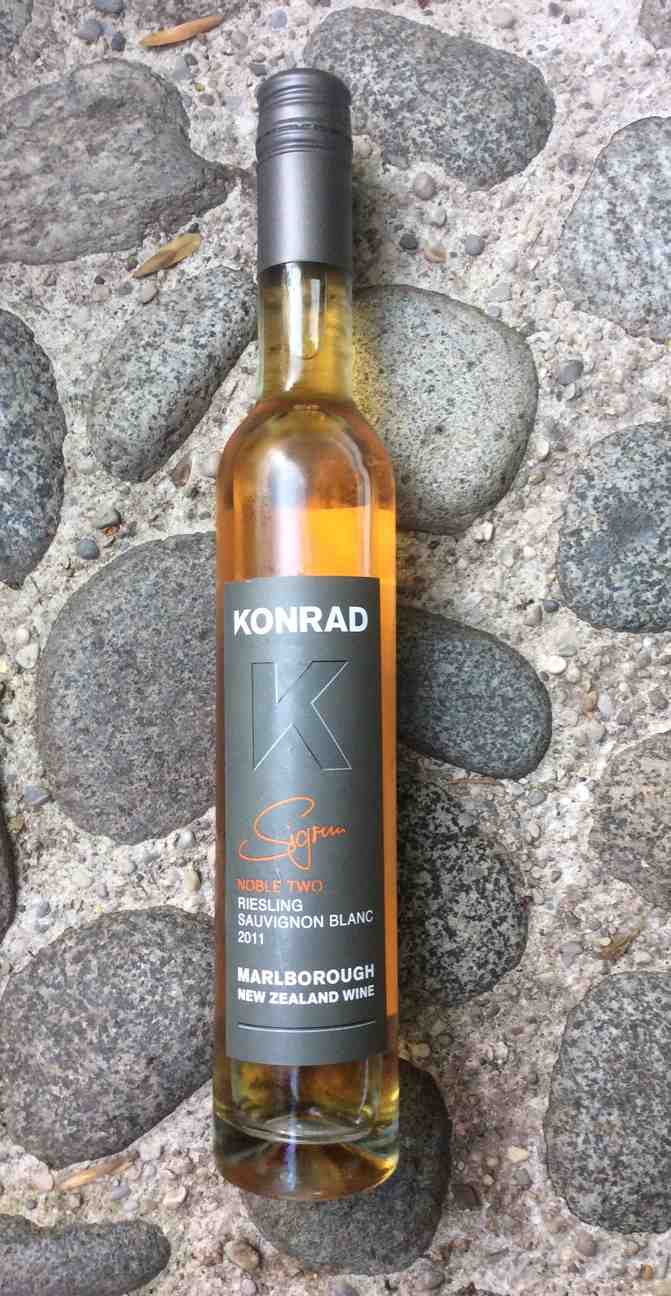
Sigrun Noble – noble rot from Marlborough

The fact that first-class dry Sauvignon Blanc is produced at Marlborough on New Zealand’s South Island only became known at the end of the 1980s, when Cloudy Bay‘s Sauvignon Blanc became a cult wine. Sensitivity to botrytis makes this grape variety a suitable candidate for sweet wine, as does the Riesling. If the microclimate is right, there is a body of water like river or lake nearby, so wet fog can develop with its humidity, but quickly dry off … Read more ...